Heading West to the End of the World

We’re finally releasing 80 West.


That feels good to actually type. It’s been a trip with some interesting detours getting to this point.


I wanted to open Twin Span with 80 West almost 2 years ago. I had all the material, the grain was milled and in the hopper, hops and yeast were on hand, and on brew day, the world ended.


The world as we knew it at least. That was the day the US government admitted that this pandemic was a real problem, and everything screeched to a halt. Twin Span wasn’t open yet, but I already had beer in fermenters and grain milled. We had to push our open date back an unknown amount of time. Beer – especially fresh hoppy IPAs don’t like waiting around for unknown amounts of time. So I made the call to reduce the amount of beer made, which would drive up the ABV and make it age better. I moved some hops around in the schedule to accommodate the new beefier malt profile. It was going to be an Imperial IPA (or Strong Ale, or Hoppy Barleywine depending on who you asked) at almost 10% ABV.


Its name changed to “80 North” to denote the change in plans and quirky nature. Local travels know that i80 runs east-west, except where it briefly runs north-south a stone’s throw from our brewery. The beer was very well received (and it’ll return at some point for sure).


80 West detour #1 – “80 North”


I still wanted to brew a true West Coast IPA, but figured it would be too samey to have a smaller version of 80 North on tap at the same time, so I waited, and brewed a few 80 Easts (New England / Hazy / East Coast IPAs). They were also well received.


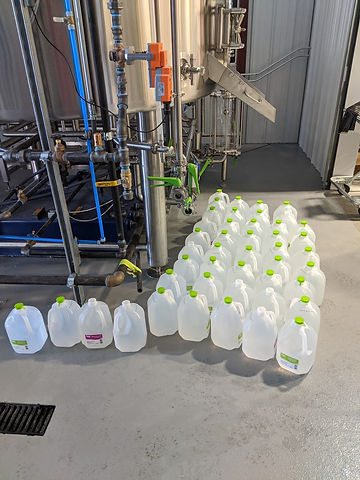
My partners kept asking when I’d brew 80 West. Eventually, I decided the time was right. I milled all the grain, got the water ready, went to get the hops ready and… the hops weren’t there. I thought they had been received, but they were on back order. I couldn’t really un-mill the grain – and I didn’t want to dump all of the water, so I had to pivot quick. I took inventory of the hops I did have – they were all excellent German lager hops – and I had a bunch of German lager yeast – so I thought I’d give an IPL (India Pale Lager) a shot. After consulting a random word generator online, Tragedy Salad was born.


80 West detour #2 – “Tragedy Salad”


I’m not a superstitious man, but at this point, I was pretty sure 80 West was cursed. I was still asked to brew it, but I didn’t dare admit to the Universe that I intended to do so. So I waited. I waited long enough that West Coast IPAs started to come back into fashion, albeit slightly modified for modern tastes. Gone were the copper, almost amber hues with aggressive biting bitterness, replaced with pale malt and a gentler hop bite. The style had morphed into something that straddled the line between old school West and the hazy Easts that had taken over the world.


During a family vacation on the west coast – specifically San Diego – I “researched” many new interpretations of this new West Coast IPA that a few have dubbed “San Diego style IPA”. They all followed the pattern of a grist almost entirely of pale or even pils malt, some even including sugar to lighten the color and body even more. All had assertive but not aggressive bitterness with a soft mouthfeel. All packed a hop punch on par with the haze bombs everyone loves – although these typically are a blend of the piney/dank hops that dominated the style in the distant past, and newer, tropical fruit punch notes everyone has expected these past few years.


I developed the recipe for my interpretation of this style in my head during the vacation and when I returned home, I wrote it down. In the blank for recipe name, I hesitated, but dubbed it “80 West”.
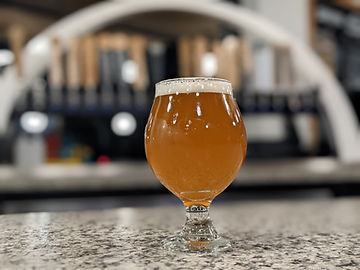
 

We have arrived – “80 West”


The recipe, the style, and the world had changed greatly from where I started, but I finally got to 80 West. Cheers.

Hop Harvest

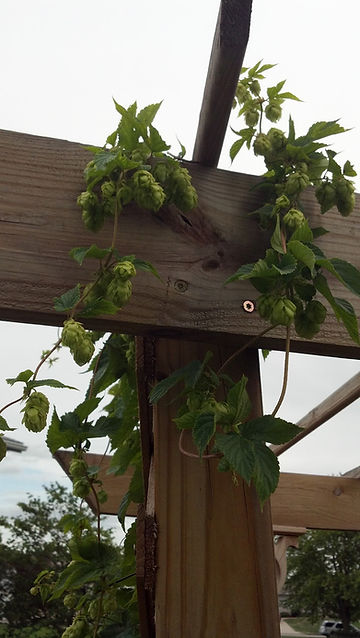
A single hop bine in my backyard, years ago.

There’s no arguing that we’re all a bit hop mad these days. We’re in the midst of a hops arms race, with brewers cramming in as many hops as their tanks can handle, making bigger and bolder aromatics with each turn, collectively moving the needle on the population’s hop threshold. The savvy consumer can even ID the superstar hops such as Citra and Mosaic when they pop up in a new brand. It’s a shame then that more aren’t aware of just how agricultural hops are.


“Hops are to beer what grapes are to wine” – Jim Koch

Jim’s the founder and president of the Boston Beer Company that makes the ubiquitous Samuel Adams line of beers, so he knows what he’s talking about when it comes to beer. I have a nit to pick with that quote, though.


You don’t really ferment hops. Grain provides the sugar and much of the flavor and mouthfeel contributions in a beer. That quote undersells the importance of grain in beer, although I’m sure Jim didn’t intend to do that. Hops are more like a spice or herb you add to a dish. I think what he was getting at with that quote is that hops are an agricultural product – and come with their own unique flavor characteristics based on their breed, soil conditions, weather, etc – in short, they have terroir.


I tried to grow hops once. I say try, because I failed. Everything I had read online and in books said that in the right climate, they’ll grow without any intervention and in fact, they’re difficult to kill off. Iowa is a good climate for them so I guess I’ll blame the soil in my yard or just bad luck on why they died. There were no flowers that first year – as

expected – a smallish crop on year two, an even smaller crop in year three, and they didn’t even come out of the ground for year four. That picture above is one of the bines in year two.


By A. Balet – Own work, CC BY 3.0, https://commons.wikimedia.org/w/index.php?curid=6301453


Thankfully, there are Iowans much more skilled at growing hops than I am. One of them invited me to a harvest day celebration back in late August. Buck Creek Hops grows some of their own hops but also sources from other farmers across the state and processes them at their facility outside of Solon. I’ve jealously listened to other pro brewers at big breweries flying out to Yakima Valley in Washington to do “hops selection” – where they rub hop cones and pick out individual lots to later use in their brews. I imagine Solon is about as close to Yakima Valley as I’ll get – for a while at least – so I definitely wasn’t going to miss this.

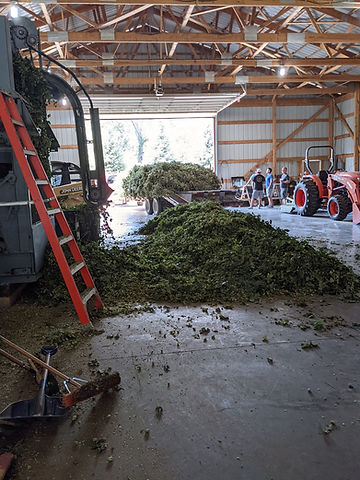
That’s a lot of hops.


I pulled off the interstate, onto a highway, through a small town, and then onto a gravel road, surrounded by corn and soybean fields, just like the landscape I grew up in, except I never saw hop fields as a kid. I pulled into an ordinary looking farm alongside a big machine shed and parked. A dog ran up to greet me with his tail wagging. The smell of hops wafted out of the machine shed so I headed in. An enormous pile of hop bines were on the floor in the center of the building. A man was loading them into an even bigger machine that noisily ingested them and sprayed out hop cones on the back end. I chatted with some other Iowan brewers as we all watched hypnotically as hop bines were tossed into the machine and came out the other end. Eventually, a truck came in and dumped out a massive pile of hop bines, more than doubling the size of the existing pile.


The smell. Oh man, it was intense. It smelled like hops, but much more pungent, and in the almost three hours I was there, I never did get acclimated to the smell. You could see hop dust in the air. We joked that you could hold out a beer glass and just dry hop that way. It was wonderful.


Buried in hops

We did get to rub a couple hop cones. You take a hop cone/flower, smash it between the palms of your hands and rub them together. You’ll get a sticky, yellow powder and release those aroma compounds. Those who spend enough time around hops can ID which breed they are and can even pick out differences between farms and harvest years. I picked out the dank, piney, and resinous Chinook characteristics any west coast IPA fan is fond of.


Spot checking humidity levels

After running through the machine, the hop cones hang out in giant bins on the floor until they’ve dried out to the desired humidity level. I somehow resisted the urge to jump into the bins and swim around, Scrooge McDuck style. A device that looks a bit like a metal detector was inserted into various points in the bin to take the readings and see if the hops are ready to go yet. They need at least 24 hours to dry so we wouldn’t get to see the hops being fed into the machine finish up, but thankfully, we could see the next step with hops that were previously harvested.


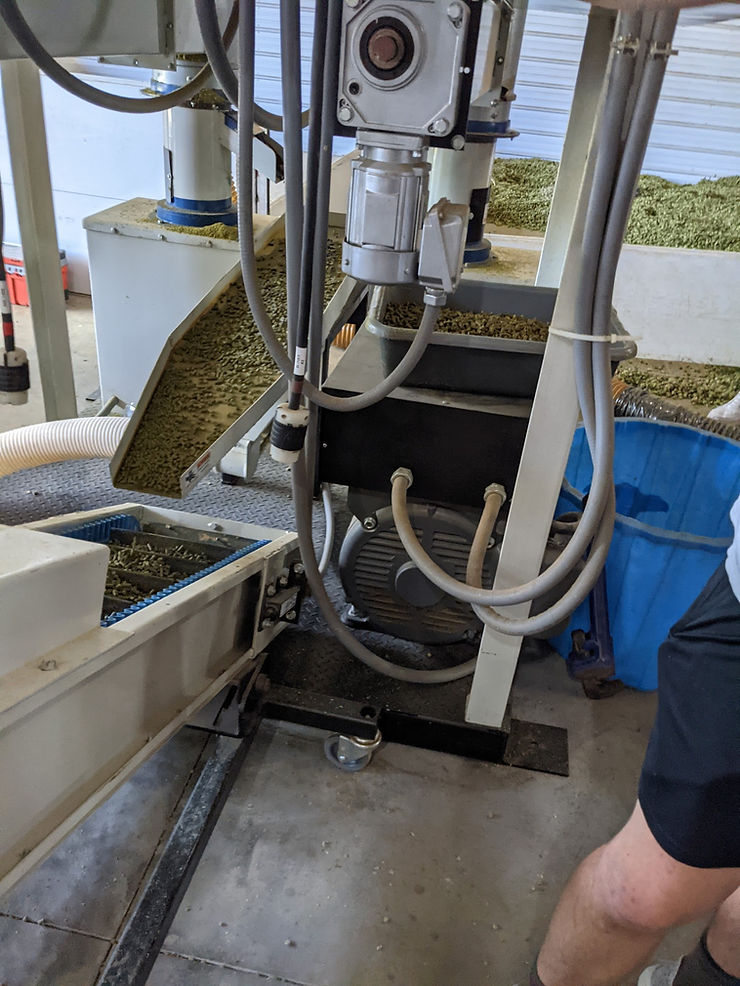
A big tube was dipped into the bin, which started vacuuming up the cones and sending them into the hopper on top of another machine. That machine compressed the cones into pellet form, which was then spit out onto a conveyor belt and then transferred into a storage bin.

We were handed some of the hops and they were quite hot to the touch and smelled, as you can guess, wonderful.

So wonderful in fact, that I asked if I could buy some of these exact hops. They were Crystal hops, which I hadn’t used in years. I forgot how much I loved them. They have this citrus candy character about them you just can’t quite get from other varieties. The pellets still needed some time to rest before they could be packaged and sold, but I was able to reserve some. I used them a couple weeks later in the Iowaska saison (which as of this writing, hasn’t been released yet, but it is delicious! Those hops really pop).


I appreciate Buck Creek for inviting me to be a part of this wonderful agricultural process. We’re not big enough to get flown out to Yakima, but a short drive up the interstate yielded just as good of results.

Beer Vacation / Research

A short-ish post today just to reassure you all that I’m still alive and well. We’re distributing now! Couple that with the general increase in traffic during summer and I’ve been bizz-ay brewing. But I did get an opportunity to do something I haven’t done in over 2 years: travel for fun.

Fun in this case is a long overdue trip to the Southwest US. I used to have a few family down there so I’ve been many times, but the wife and kids – not so much. San Diego is a favorite between my wife so that was an obvious stop on our trip, and you haven’t lived until you’ve been to the Grand Canyon (it’s the damnedest thing) so we made sure it was a stop. Sedona and Phoenix were new to all of us, so we had to visit there as well.

The landscape down there is breathtakingly beautiful. All that sun and dessert pulls on this pale ginger’s soul in powerful and dangerous ways. I could write pages on what we saw, natural, historical, and just plain strange, but I imagine you came here to read about beer, so I’ll leave that out.

Now, I learned long ago not to add too many beer destinations into a family vacation itinerary. My wife and kids are amazingly supportive of that half of my life, but I’m not about to drag them through the hippest and trendiest tap rooms. But if a given brewery/pub has a kids menu and isn’t too far out of the way, we’re good. And dang it, San Diego and Phoenix delivered that in spades.

We hit at least one brewpub per day on our two week trip, sometimes two. I’m not going to review each individually, but a few really stuck out. We visited Stone’s Liberty Station location first. We visited Escondido last time and neither location disappointed. We can get Stone beers surprisingly fresh in Iowa so other than a few pub exclusives, there wasn’t much new for us. They might not get hype like they used to, but I maintain that you must visit them if you’re in the San Diego area.

The same goes for Ballast Point (pictured at the start of the article). High quality food and beer that makes for a real destination. We can’t get Pizza Port beers here in the midwest, but I was happy to mark this legendary location off my bucket list – pictured to the left (along with a candid of my wife). Chill, old school craft beer vibes and quite possibly the best West Coast IPA of all time in their Swami (in my humble opinion). Half Door Brewing is worth calling out too. It’s a Victorian / Plantation style house plopped down in front of the PetCo stadium. Incredible food and solid beer with a very unique vibe.

Moving onto Phoenix, I was sure to stop by Wren House for their GABF winning Hazy IPA and American Lager (those are REALLY big accomplishments). I was blown away by the quality of the lager at Fate Brewing – in particular their hatch chili lager. I don’t normally like chilies in beer, but that beer may have converted me. (Someone wrote “hatch chili lager” on our suggestion board a while back so it might have to happen now…) Last but not least in Phoenix, Four Peaks’ English Pale Ale is so good it’s transcendent. Seriously, it’s the best English Pale Ale brewed outside of England – fight me.

I’ve left some honorable mentions out, of course, and there was only one brewery that I did not think was of very high quality (which I’ll leave nameless). I returned home feeling like we’re on the right track for beer and food. It also inspired me on some future recipes (that Hatch Chili Lager is going to be a challenge, but 80 West is definitely finally going to happen soon). It inspired me to scrap some recipes and gnawing brewing related insecurities as well.

How can you not be inspired when looking at something like this? Cheers

Full Beer Immersion

I hang around in a couple Cicerone study groups online as I’m toying around with the idea of going for the next level certification, Advanced Cicerone, but also to help others out with their studying. In one of those groups, someone said they were just getting started studying for the Certified Cicerone test and wanted to know the best way to study a style. Everyone has their own approach, and your mileage may vary of course, but here’s my method – I’m calling “full beer immersion”.

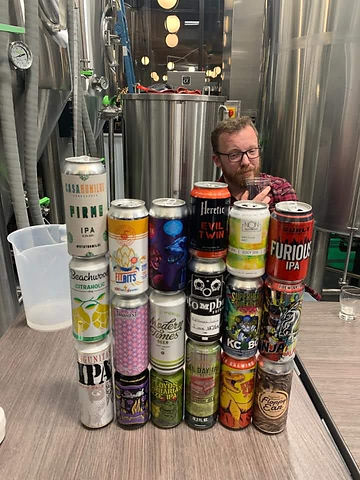
Wall of IPAs

Learn the technical details…

This is where the BJCP really shines. Pop over to their website and look up the style you’re studying (such as British Brown Ale). There you’ll find what the beer should look, smell, and taste like, along with the technical details such as IBU and ABV ranges. This is arguably the definitive source for style information, but it’s not perfect – some excellent examples of the style don’t fit 100% within the parameters, and sometimes styles are introduced without the author actually tasting a real example. Just remember that styles are guidelines and you shouldn’t worry about the exact tech specs (unless you’re studying for a test!).

… but don’t get too hung up on them.

The style guidelines I linked above are dated 2015. Before that, we had the 2008 style guidelines. Before that, the 2004 guidelines, and so on. New guidelines are published every few years because styles are constant falling in and out of popularity. The most current guidelines (2015) don’t list Hazy/New England IPAs. That’s because when they were written, they were still very uncommon. Unlike today, where it seems like every other beer in the store’s cooler is a hazy IPA. In the previous guidelines, no one had ever even brewed a hazy IPA (or at least didn’t market one as such).

And many styles change over time. In 2008, Extra Special Bitter was a thing, yet in 2015, it became simply Strong Bitter. I suspect that was to distance it from Fuller’s ESB and have every homebrew and commercial version of this style be judged against that one beer. Style parameters change over time as tastes change. I wholly expect the bracingly bitter West Coast IPAs to lose some IBUs in the coming years as Hazies continue to take over the world.

Learn the history

Why do some Bitters have fewer IBUs than some Milds? Why are some Porters bigger than some Stouts? These are things you won’t learn from the style guidelines, but they’re key information if you want to really understand a style. So study up on their history. Get a short essay from The Oxford Companion to Beer or simply poke around the web, looking for blogs, forum posts, websites, and videos that cover the history. You’re looking for context on these styles rather than trying to memorize dates and political figures.


Drink!

Let’s not forget this step. Back up in the BJCP style guidelines, at the bottom of each style is a list of commercial examples. Seek out as many of those as you can. Invite some (fully vaccinated) friends over and sample as many as you can. Do so mindfully – take notes, have the style guideline printout in front of you, maybe even fill out a tasting sheet. I can say from personal experience that some styles that seem narrowly defined and all examples taste the same (such as Kolsch) vary wildly when lined up and tasted side-by-side. Oh, and if you can find a recipe (actual or clone) for each beer, this is the perfect time to check that out. You don’t even need to know how to brew, but this will help you become familiar with ingredients and their impacts on flavor.

Become a virtual tourist:

The best place to drink a given beer is at its brewery, or at least on its home turf. Of course, this is a challenge for most of us – we can’t just jet off to Germany for a weizen or Dublin for a stout and then pop back home. Modern technology allows us to do the next best thing. If I really want to dig into a beer or style, I visit the brewery in Google Maps / StreetView, I visit their website, and I’ll listen to a local radio station (through something like Radio.Garden). I look at photos from visitors to the brewery and I’ll even virtually walk the streets, looking at nearby restaurants, bars, and hotels. It might seem silly, but this extra layer of context can help tie everything together.

I encourage you to pick a style and try some of these tips. Cheers!

Mash Tun Time Machine

This may surprise those that know me, but brewing is not my only hobby. But if I’m being honest, it sorta influences all of my other hobbies. I love to cook, but that’s close enough to brewing that it might not count. I regularly find ways to sneak beer into the food afterall. I like to bike and run, but that’s more about attempting to keep the beer belly in check. And I love history – reading historic fiction and nonfiction and doing my own research – and yeah, some of that has to do with brewing.

I’ve been a history buff as long as I can remember. I blame that on my mother – I spent my afternoons in my hometown’s library with her as the resident librarian, flipping through books and magazines. Ancient Egypt and the Wild West fascinated me. I fantasized about traveling back in time to experience the pyramids being built or to see the shootout at the OK Corral first hand. Sadly, time travel will never be possible (future time travelers please correct me… NOW), but we can get close by visiting the places they lived and by eating and drinking what they did.

A (full!) bottle of Potosi Bock from ~1950 behind my home bar

Dogfish Head introduced me to this idea of beer time travel through their Ancient Ale series. This lead me to seeking out other examples such as Professor Briem’s series. Beyond that, it’s mostly a DIY pursuit. Online, beer historian Ron Pattinson of Shut Up About Barclay Perkins has contributed countless recipes of UK and continental beers from the last 200+ years. Which is great for the other side of the pond, but what about here in the US? I haven’t been able to find much at all – other than George Washington’s recipe of oats, molasses, and hops (that just doesn’t sound very tasty). So it looks like I have my work cut out for me if I want to time travel very far into the past for my homeland.

The Eagle Brewery, opened in 1855, still stands today

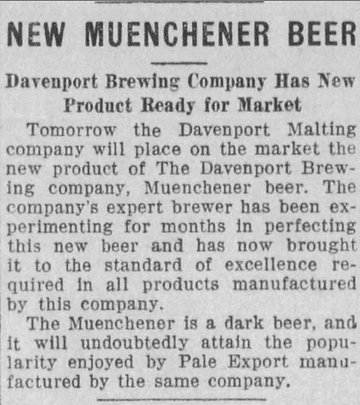
I’ve started digging through old local newspapers for articles and advertisements that mention the area’s beers and breweries. Davenport has a long history of beer brewing, dating back to before the Civil War, with some late 19th century breweries, taverns, and brewer’s homes still standing today. However, these are just shadows rather than preserved historical artifacts. If there are recipes or records, I have yet to uncover them, but I have found some tantalizing hints. There are mentions of beers made with all Scott County grown grain and more than a little copying of names and styles from the mega brewers from nearby Milwaukee. I can look at their records and recipes and make an educated guess about what my predecessors were making here over a century ago.

Davenport takes a stab at brewing a Dunkel in 1909 (src: Newspapers.com)

I guess the point of this entry is to ask you to stay tuned – a beer or two may come out of this research. I have a Pre-Prohibition Porter and Pre-Prohibition Lager on right now – why not add a Pre-Prohibition Weissbier? What other beers have been unjustly left behind in the past?

Aw, shucks! Seaweed Blonde and Oyster Stout.

Updated: Feb 13, 2021

Have you ever heard of a Fish Bladder IPA or a Seaweed Blonde Ale? How about an Oyster Stout? You’ve likely never heard of the first two – for good reason – they sound disgusting. You very easily could have heard of the third one and you may have even tried one before. However, I can assure you, you’ve tasted far more Fish Bladder IPAs and Seaweed Blonde Ales than Oyster Stouts.

The Flaggy Shore

Before I explain myself, let me take you on a trip to Ireland. My parents, my siblings, and our SO’s rented a cottage on the west coast, just south of Galway in the Burren, on the Flaggy Shore. It’s a very rural part of the country, filled with low green hills, dotted with grazing cows and partitioned by ancient stone walls. Waves calmly brush up against the shore that is more stone than sand, leaving behind strands of seaweed. The smell of the ocean permeates everything, laced with peat smoke. Along the shore, within stumbling distance of our cottage, is a pub, a favorite of the local fishermen.

Linnane’s Lobster Bar

One night, I’m sitting in the pub next to the fire, talking to a local about many things, most pertinent here being beer. We were likely on our 3rd or 4th Guinness at that point in the conversation. I pointed toward a shelf behind the bar, near bottles of Jameson and gin, where a dusty bottle of Oyster Stout rested. “How’s that?” I asked my new friend. “Never tried it. Why would I when we have this?” he replied while lifting his Guinness. So it goes.

I noticed many bottles of Oyster Stout on shelves behind Irish bars, more as an oddity than an offering as few had any fresh or any at all in stock. One pub had a draught line dedicated to oyster stout, but sadly, it was sold out when I visited. There was plenty of stout, and plenty of oysters, but never did they comingle in the bottle.

Back in the US, a few breweries occasionally release an oyster stout (I’ve had 3 or 4 commercial examples). I’m not aware of any that have one as a flagship. That is entirely understandable as the consensus appears to be to turn one’s nose up at the thought of oysters in beer. Which is a shame, as anyone that has paired a stout such as Guinness with well-prepared oysters can tell you that it is a lovely combination. The dark roasty beer mixing with the brine of the oyster takes me back to Linnane’s.

Chef Juan is a master shucker.

The origin story of Oyster Stout is (allegedly) that breweries on the coast with easy access to oysters discovered that adding shells to the boil would cause the beer to drop more clearly, resulting in a more attractive pint – without affecting the flavor of the beer. This went on for some time amongst brewers until one such pub brewer, likely seeing his or her patrons slurping oysters alongside porter and stout thought to cut out the middleman and added the oyster meat into the beer as well.

I don’t know how true that story is, but there’s reason to believe it. Calcium does help a beer drop clear and oyster shells are loaded with calcium. Fish bladders and seaweed also help beers drop clear and are prevalent enough that the last beer you drank likely had one of those two ingredients added to it (I told you I’d come back to why I asked you that question). And the decision to add the meat to the beer? Admittedly the first person to do so was likely a little strange (/brave), it is a totally valid way to cook oysters – they pick up the flavor of the beer!

A stainless steel strainer helps fish them out

I pitched the idea of brewing a small batch of oyster stout for our Valentine’s Day Beer Dinner (wink wink, nudge nudge) to the other managing partners and they looked worried, but to their credit, they didn’t say no(!). So I worked with our head chef Juan to source and shuck enough oysters to get over 2 pounds of meat. Two pounds of shells (which was a little less than half the total shells) were added at the start of the boil and then in the last 5 or so minutes, I boiled the meat in a strainer so I could easily pull them out. Juan then promptly battered and fried the oysters, which made for a delicious meal as the stout cooled down on its way to the fermenter.

That 2 pounds of meat wasn’t exactly an arbitrary decision. From what limited information I could find online, it looked like you want to use between 2 to 6 pounds of oyster meat per barrel of beer (between 1-3oz per gallon). That’s quite the range. From my experience, too few oysters and it’s just another beer – not even perceptible on the palate. Too many and you have fish soup beer. Somewhere in the middle, you get an increased perception of sweetness thanks to the salinity of the oyster liquor and whiff of coastal character, not unlike a mild Islay Whiskey.

What it doesn’t taste like, is oysters. So if you’ve never tried oyster stout before, your chance is coming up soon with the release of Father of Perl. To quote one of the initially skeptical partners when he tried it, “Hey! This actually isn’t bad. It’s good!”

Hindsight is 2020 – Looking back and ahead

I’ve missed a year-end post by a few days, but better late than never. I’ll try not to get too sentimental. 2020 was a bit of a dumpster fire for the world and was for many people the worst year of their life. We’re all happy to see the year behind us, but it’s wise to remember that changing the calendar does not make our problems go away… I’m not here to talk about that though. I have been extremely fortunate in that I’ve been able to keep my job(s) and my health in 2020. I even helped start a brewery. So let’s talk about one of the unexpected (at least to me) challenges around that.

Looking in 11 months ago

The normal arch for a pro brewer seems to be that they start at the bottom, maybe volunteering at a brewery to help clean kegs, then getting hired on as a cellarman, then assistant brewer, and finally head brewer. After enough experience with that, they make the leap and open their own brewery. I have the utmost respect for those who follow that path. It is a tremendous amount of work and dedication. I did not follow that path. I had the opportunity to jump right into the deep end and I did so – without knowing how to swim. So far, I have not drowned.

Our RO system wasn’t working yet on our first test batch so we had to improvise

I’ve been homebrewing for about a decade and a half so I wasn’t entirely unprepared. The process is largely the same, just bigger and most steps take longer. Plus there is dangerous equipment and chemicals that don’t exist at the homebrew scale. Homebrewing does not prepare you for necessary bits of pro brewing of maintaining a cellar, keeping a large draft system clean and balanced, keeping the beer people love in stock, and not making too much of the stuff they don’t love as much.

That last bit has been the biggest challenge for me. I hardly know what I want to drink on a given day, let alone what the public wants to drink. So I started with a few of my personal favorite recipes with the hope that people would have similar tastes. And they did! We received mostly positive feedback from those initial brews. Some of them have come back already and some will come back in the future, but I have many more recipes to try out.

Our first troll HATED our initial selection of beers and let us know how wrong we were.

In my other life, I often write short programs to automate a process or make insights into data when there’s too much to manually parse through. So I created a program that looks into our POS data and calculates a “popularity” metric for each beer. It’s essentially ounces sold per day. This isn’t perfect, of course. When we only had 5 beers on tap, those 5 skew higher than beers when we have 20 on tap. Slowdowns due to weather or COVID restrictions skew the results down just as busy weekends skew upwards. Imperfections aside, this data point gives me a rough idea of what people like to drink. So here’s our top 10 for 2020 in descending order:

1. Rye-Ryetoberfest

2. 80 East to Ariana

3. Moliner Weisse

4. Cherry Pylon

5. The Gold

6. Ryetoberfest

7. 80 East To Amarillo

8. Merry (cran) Berry

9. Liffey

10. Mango Milkshake IPA

What does this tell us? Should I just brew barrel-aged Ryetoberfest year-round? Maybe… but I’d probably be haunted by my German ancestors for brewing an Oktoberfest out of season. Should I throw out all versions of 80 East except for Ariana? No – I feel like variety is important and Ariana was sold during beautiful weather and with far fewer COVID cases in the QCA. 80 East Amarillo is likely the more “popular” beer given proper context.

So what does this data show? Honestly, I don’t know yet, but it’s been fueling a lot of my thoughts around what I’ll brew in 2021. I’m certainly taking a more strategic approach to filling the tap rails. I plan on always having a fruited sour on and always having a Pylon on. More barrel-aged beers and more juicy hop bomb IPAs too. And The Gold and Liffey aren’t going away anytime soon. There will be plenty of new stuff too! I have a notebook full of recipes I’m excited to introduce to everyone.

Cheers to you all and here’s to 2021!

“Do a barrel roll!” – an update

It’s been a minute since I last made a post here. These past few months in particular have been a whirlwind. This past weekend was the first time I hadn’t brewed since February. Oofda. Sounds like a good time to get you up to speed on what I’ve been working on, and what’s in the works. Let’s start with barrels!

I consider barrel aging one of those “next tier” brewing practices. Barrels introduce so many variables into the brewing process that a new brewer absolutely should not jump right in. Thankfully, I’m not a new brewer. I have had a 5 gallon bourbon barrel in my home cellar for a few years that generated a few excellent “clean” beers before becoming a sour solera. I love the extra flavor and depth you can pull out from a barrel in a relatively short time. So I was pretty excited when Mississippi River Distilling Company just up the highway from us offered some of their barrels. The first beer to barrel age was easy – Ryetoberfest already had a significant amount of rye malt in it so why not add it to a rye whiskey barrel? That proved to be an excellent idea and beer.

Next up, I added a dark braggot I’ve named Panna Moon to one of their bourbon barrels. The first resident in my home barrel was a mead that was phenomenal. If you like honey whiskeys, this was sort of the inverse of that – honey up front with whiskey notes. That beer is still hanging out in the barrel, and I’ve kept myself out of it the past month or so in order to prevent me from “over-sampling”.

There’s another bourbon barrel hanging out, waiting for some of the behemoth Quad City Quad to come over and hang out. Soon, friends. Soon.

In the middle of starting this barrel program, John from nearby Cat’s Eye Distillery reached out and asked if we were interested in using their barrels. With eclectic whiskeys like Krupnik and their Obtanium series, these guys definitely have the mad scientist mindset so many homebrewers excel at. We recently stopped by to pick up a barrel and got a tour and a few samples. There are barrels of all shapes, sizes, colors, and ages looming over a collection of homemade and retrofitted gear. Big homebrew energy in the best way possible. The samples we tasted were all excellent and the barrel we picked up is a beauty. It started its life at Heaven Hill well over a decade ago, then hosted Toppling Goliath’s ultra popular Kentucky Brunch Brand Stout. It then hosted Cat’s Eye Kentucky Whiskey. That’s quite the pedigree to live up to but I think we can put something tasty in it. Something for our 1 year anniversary perhaps…

There’s a lot more to catch you up on, but that’s it for now! Cheers!

The Nose Knows

The first time I smelled Brett(anomyces) in a beer, I instantly thought about my long-passed grandmother. That surprised me. She didn’t drink beer, at least not around me, and certainly not barrel aged beers.

I dug into that memory a little deeper – what specifically about her was I thinking about? And I realized it was her basement. She had a very old house and even older cellar, the kind that really put the “root” in “root cellar” – stone walls and dirt floors. I never spent much time in the basement as it spooked me out as a kid, but that musty smell of wet earth and stone stuck with me, buried deep in my subconscious to be resurrected by a beer of all things.

Some people get “barnyard” or “horse blanket” from Brett. Having spent a considerable amount of time growing up in barnyards and around horses, I can’t say I understand the connection. But damp basement, Brett has that in spades.

A flavor and aroma descriptor used to describe beer an awful lot (image source) Am I wrong for linking Brett to basements instead of the textbook descriptors of farms? Absolutely not. Studies have shown that your sense of smell is one of, if not the, strongest sensory link to memories. It makes sense given just how close your nose is to your brain.

It’s easy to fall into the trap of thinking about what you should be smelling or tasting and letting that get in the way of what you’re actually smelling or tasting. If a beer smells like stale Cheerios or a candy from your childhood (or even cat urine) – don’t ignore it, but rather lean into it and see if you can find the source. A beer that smells of circus peanuts and strawberry starburst is way more interesting than vaguely saying a beer is “fruity”. Trust your instincts. The nose knows.

For the love of beer gardens

For many, when they think of drinking in Germany, they think of long skinny tables surrounded by people crowded shoulder to shoulder drinking liter mugs of beer while wearing lederhosen or dirndls.

That kind of thing absolutely exists – for a couple weeks each year. The rest of the year, the drinking scene is much more relaxing. Think of a quiet courtyard with an ornate fountain in the middle, paved pathways winding between wooden picnic tables sitting on soft gravel, big chestnut trees providing ample shades, swaying ever so slightly in a summer breeze. There may be music playing in the distance, but likely you’ll just hear the clink of plates and glasses along with quiet conversation and occasional laughter. This is the typical German biergarten and I don’t know about you, but I’d pick that any day over a packed noisy tent.

Every town, regardless of its size, seems to have at least one biergarten in Germany. Some may have ornate sculptures scattered amongst dozens of tables and some may just be a few tables with umbrellas on top of a gravel lot. Some even have a playground for the kids to enjoy while the adults enjoy their drinks. And the question on whether a garden is “family-friendly” doesn’t even seem to cross the average German’s mind – of course they are – biergartens are meant for family and friends to gather.

That clashes a bit with the American drinking culture. These gardens call for a measure of subtlety and there isn’t a whole lot we do subtly – including drinking. The American beer drinking culture largely started with German immigrants and there are accounts of them attempting to create biergartens in 19th century America and not always seeing eye to eye with their hard-working, hard-drinking clientele.

We now have far more breweries than America or Germany has ever had and with that increase in options, I’m starting to see some biergartens pop up in the US. I’m hoping we can contribute to that picture at Twin Span with our patio. We already have huge Bavarian style pretzels and with our Keller Pils and Hefeweizen, we have the same beer options as many biergartens. Now we just need some chestnut trees (lederhosen optional).